 Breaking


Intro: a horror show called 'AI cash burn'
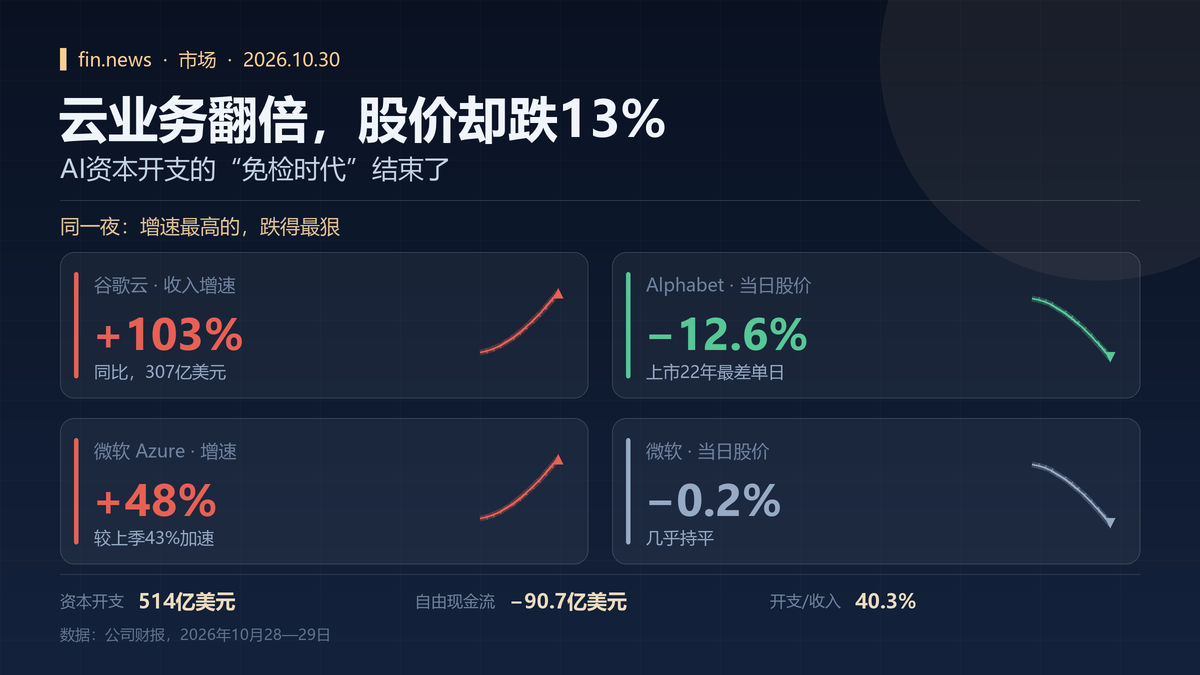
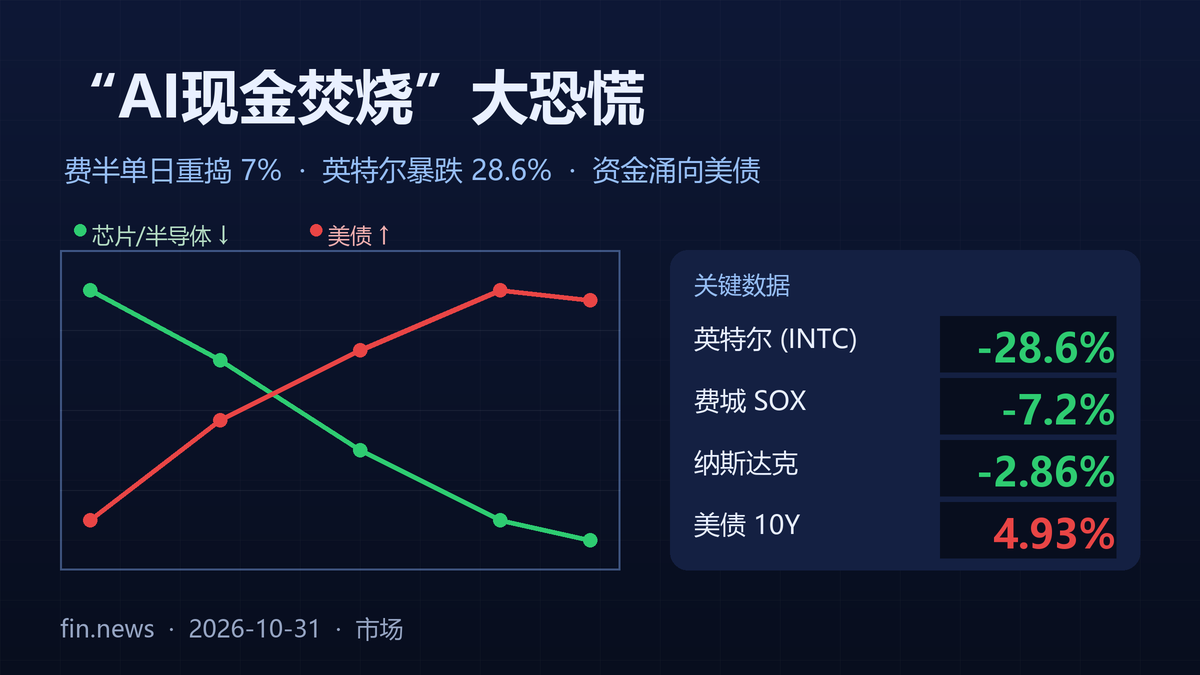
On the final trading day of October 2026, Wall Street staged a horror show built around "AI cash burn." On Thursday, Alphabet — Google's parent — kicked off the end of the AI capex "free pass" with a 12.6% single-day collapse after its free cash flow turned negative. Just one day later, the panic spread across Friday's session: Intel cratered nearly 30% intraday, the Philadelphia Semiconductor Index (SOX) tumbled more than 7% for its worst day since June, and the Nasdaq Composite slid 2.86%. Investors voted with their feet — once "how much you spend" stopped being a shield, the market began demanding: where exactly is your return curve?
Intel: worst day in four decades
Intel became the epicenter of the sell-off. Its shares plunged 28.6% on Friday — its largest single-day drop in more than four decades. The trigger was straightforward: the company is burning cash heavily on AI-related R&D while conceding that PC demand has slowed and could stay weak through next year. For a giant once known for steady cash generation, the market used Intel to vent its frustration with the "heavy-asset, slow-payback" model. Intel's collapse was not an isolated event; like a dislodged brick, it brought down the entire chip wall.
SOX bloodbath: from one name to the whole chain
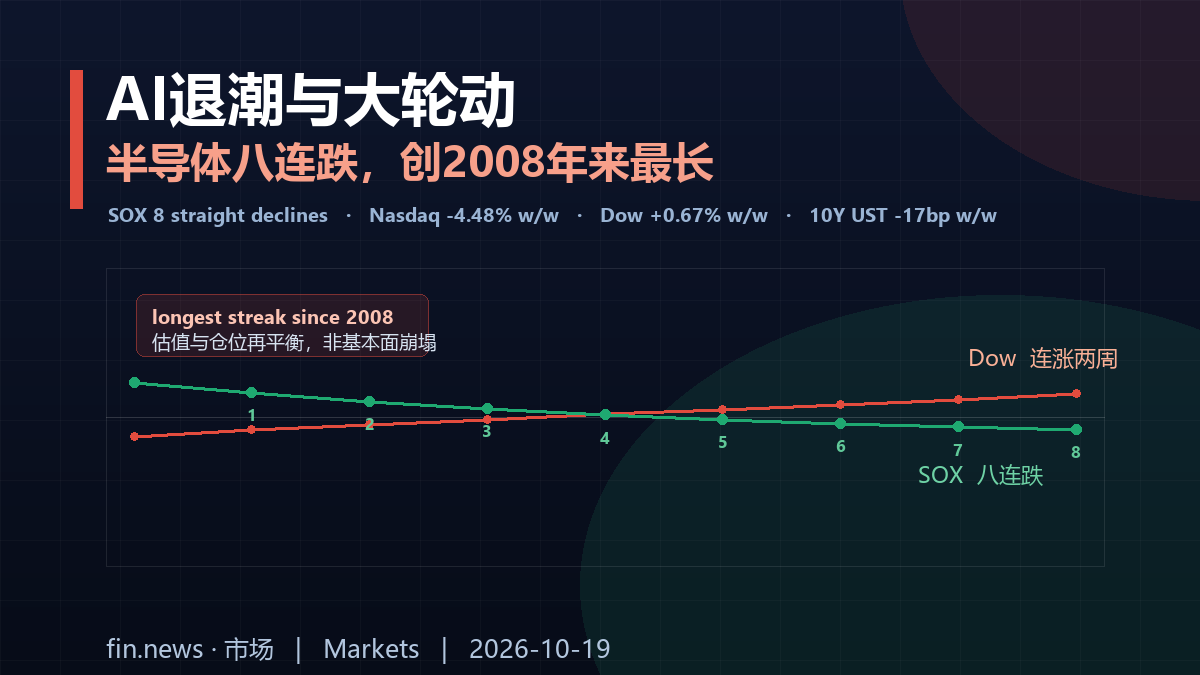
The PHLX Semiconductor Index fell more than 7%, touching its lowest level since May and posting its biggest one-day loss since late June. The S&P 500 technology index dropped 4.2%, its weakest day since early June. At the stock level, SanDisk fell more than 13%, Qualcomm more than 11%, AMD more than 10%, and Nvidia more than 4%. Alphabet, which had already tumbled 12.6% on Thursday on a cash-flow deficit, slipped another 1.4%, bringing its two-day decline close to 14%. The logic is direct: the larger the AI infrastructure capex, the more it must prove order conversion, revenue growth and free cash flow can keep pace — and when it cannot, the "high valuation plus heavy spending" combo becomes a double-edged sword.
Amazon also 'burns', haven flows to Treasuries
Even Amazon, usually seen as a dual engine of cloud and retail, was not spared, with its shares down 1.4%. Its latest results showed free cash flow remaining under pressure as AI-related investment rose. In contrast, haven demand flooded into Treasuries: the benchmark 10-year yield fell 5.8 basis points to 4.931%, the 2-year dropped 6.64bp to 4.59%, and the 30-year eased to 5.3093%. More notably, the 10-year is on track for its biggest monthly decline in nearly three years — not a signal of easing, but a "growth scare" bid for safety. Energy was the day's sole bright spot: buoyed by Middle East tensions and refining margins, Exxon Mobil and Chevron posted strong profits, lifting the sector against the tide.
Global contagion: Korea trips its sidecar, Nikkei off 2%
The sell-off was not a US-only show. Europe's three major indices closed mixed — Germany's DAX fell 0.85%, France's CAC40 was nearly flat, and the UK's FTSE 100 edged up 0.07% — as markets raised bets on a December ECB hike. In Asia, South Korea's KOSPI slumped 3.48%, at one point falling more than 5% and triggering the "sidecar" mechanism, with a month-to-date drop exceeding 16%; Japan's Nikkei 225 fell 2.12%, with Kioxia, SoftBank, Advantest and Tokyo Electron down more than 5%. South Korea and Japan's heavy exposure to memory chips and semiconductor equipment made them amplifiers of the AI-chain rout. Cryptocurrencies also came under pressure: Bitcoin fell 2.49% to about $76,900, and rumors of a hack at Binance, the world's largest exchange, further dented risk appetite.
Conclusion: the free pass is over, the market wants 'returns'
From Alphabet to Intel, from ServiceNow to the entire SOX, the market is completing a shift in its pricing paradigm: the AI narrative's "free pass" is over. For the past two years, any company that announced bigger AI capex saw its shares soar; now investors want to see the slope of returns — Microsoft's Azure accelerating to 48% with its stock down only 0.2% is the watershed between "returns delivered" and "returns in doubt." As financing costs rise on inflation and rate-hike expectations, and negative free cash flow becomes routine, the "burn cash for growth" story gets harder to sell. For fin.news readers, this may be a signal: AI remains a long-term theme, but stock-picking has shifted from "who dares to spend" to "who truly earns."