 Breaking


I. The Classic Logic "Failed": Expectation Gap Repaired After the Dust Settled
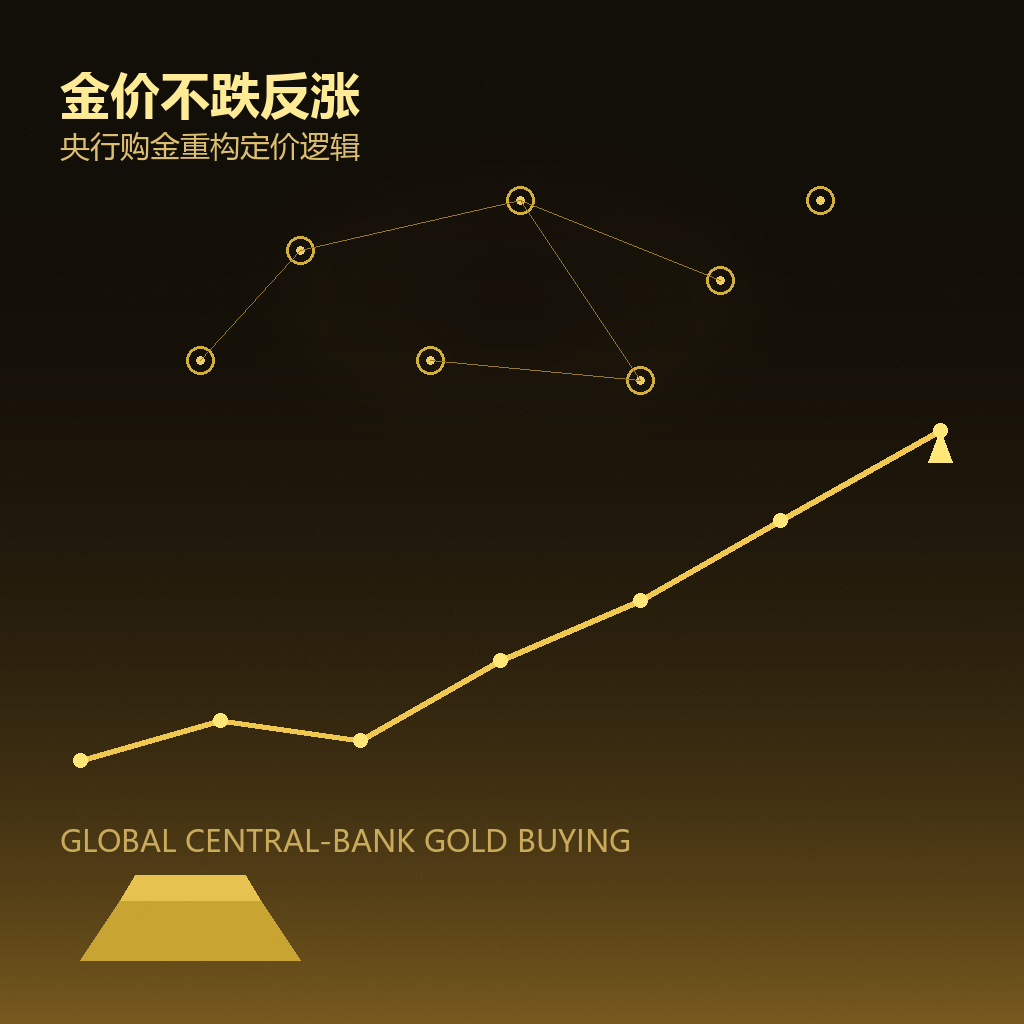
By the textbook framework, gold is a non-yielding asset: a Fed rate hike should lift real Treasury yields, raise the cost of holding gold, and strengthen the dollar—all of which pressure bullion prices. Yet after the 25bp hike on 17 September, gold did the opposite. The COMEX front-month contract dipped to $4,234/oz, then rebounded over the next two sessions to close at $4,415.9 on 19 September, reclaiming the $4,400 level and reversing two weeks of decline.
This was not a breakdown of pricing rules but a shift in trading logic. The hike was already fully priced in before the meeting; the dip that followed was the market's anticipation. Once the outcome matched expectations and uncertainty cleared, sidelined longs re-entered. What truly weighs on gold is not the absolute rate level but how long restrictive policy persists. As the peak-rate path became clearer, the opportunity-cost pressure on gold eased and its allocation case re-emerged.
II. The Anchor Shifted: Central Banks Are the New Marginal Buyer
The deeper support for this rally lies in a structural change in demand. According to the World Gold Council, central banks bought a net 288.9 tonnes of gold in Q2 2026—up 62% year-on-year and a record high for any second quarter. China's central bank added roughly 20 tonnes in August, its largest monthly purchase since October 2023, extending a 22-month buying streak. J.P. Morgan projects about 755 tonnes of official purchases for the full year, with most major banks clustering in the 750–850 tonne range—among the strongest sovereign buying cycles since 1967.
Unlike retail speculation, official-sector buying is strategic and trend-like, independent of short-term rate moves, providing a structural price floor. In the WGC survey, 89% of respondent central banks expect global official gold reserves to keep rising over the next 12 months, and 45% plan to increase holdings within a year—both record highs. Central-bank demand has升级 from a marginal disturbance to a pricing anchor.
III. De-Dollarization and Fiscal-Credit Anxiety: Gold's Strategic Role Returns
The motive for the buying spree is geopolitical and strategic more than purely financial. As sanctions and asset freezes are used more often as geopolitical tools, emerging and some developed economies are diversifying reserves away from heavy dollar concentration. Unlike foreign-currency reserves held in another country's banking system, gold cannot be easily frozen or seized, making it an ideal hedge against financial-system risk.
Meanwhile, elevated U.S. fiscal deficits and a swelling debt stock have intensified caution over the dollar's long-term credit. Together, these forces are reclassifying gold from a tradable commodity into a strategic reserve asset. Hong Kong's first Five-Year Plan (2026–2030) even names gold as the entry point for building a commodities trading ecosystem—a policy-level confirmation of the trend.
IV. Institutions and Households Converge: A "Three-Horse" Demand Engine
Gold pricing no longer "walks on one leg" of real rates. Central-bank buying, institutional allocation and household hedging now form three drivers, lowering gold's sensitivity to Fed rates while raising its sensitivity to geopolitics, fiscal credit and monetary regimes. In H1 2026, bar-and-coin demand reached 339.336 tonnes, up 28.42% year-on-year, as household motives shifted from jewelry to wealth preservation.
A Cheung Kong Graduate School of Business survey found the net share of investors willing to allocate to gold rose about 13.4 percentage points versus October 2018; 71% of retail investors expect gold above $5,000 in 2026. Dips are treated as buying opportunities rather than sell signals, reinforcing upward momentum.
V. Implications and Allocation Guidance for Investors
First, understanding the multi-variable support—central-bank buying, safe-haven demand and fiscal credit—helps interpret gold swings during a hiking cycle without being misled by a single narrative. Second, gold's low correlation with equities and bonds gives portfolios genuine diversification and tail-risk hedging; treat it as a long-term allocation, not a short-term trade. Third, watch quarterly central-bank purchase data: if accumulation moderates, the floor could weaken. UBS struck a constructive 12-month tone on 17 September, while Morgan Stanley sees a Q4 average near $5,055.
Conclusion
Gold's refusal to fall after the Fed hiked signals a re-architecture of its pricing logic: the driving force is migrating from private speculation to sovereign demand. In an era where de-dollarization and fiscal uncertainty intertwine, gold's monetary and strategic value is being re-priced. For investors, grasping this structural shift matters more than chasing any single day's move.