 Breaking
Analysis of the logic behind the sustained strengthening of gold prices, with multiple factors supporting the medium to long term market of precious metals


Since August 2026, the international spot gold price has continued to rise, constantly refreshing the stage highs, and the precious metal sector has become one of the most closely watched main lines in the global capital market. The sustained strengthening of gold prices is not driven by a single factor, but rather by the resonance of multiple forces such as Federal Reserve policy expectations, global geopolitical risks, and central banks' continued increase in gold holdings. The allocation value of precious metals has once again become a focus of market discussion.
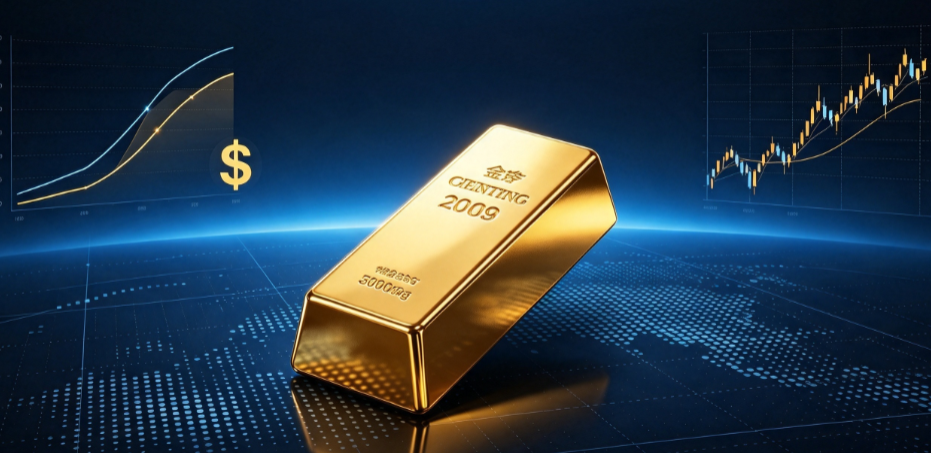
The core driving force of this round of market trend comes from the expectation of global real interest rate decline. As US inflation data gradually falls, the market expects the Federal Reserve's high interest rate cycle to come to an end. For a long time, as an interest free asset, the price trend of gold has been highly negatively correlated with real interest rates. Once the market forms expectations of interest rate cuts, funds will continue to increase their allocation of gold to hedge future asset fluctuations. The simultaneous weakening of the US dollar further boosted the international gold price upward at the pricing level.
The continuous central bank purchases of gold constitute the medium to long-term bottom support for gold prices. In the past two years, central banks in multiple countries have continued to increase their holdings of gold reserves, optimize their foreign exchange reserve structure, and reduce their dependence on US dollar assets. Continuous official buying, stable absorption of market supply, effectively hedging against fluctuations caused by short-term speculative capital inflows and outflows, and building long-term support for gold. Data shows that China's central bank's gold reserves have maintained an increasing trend for several consecutive months, reflecting the global trend of diversified reserve allocation.
In addition, global geopolitical uncertainty continues to exist, and the demand for safe haven in the market cannot be eliminated for a long time. Whenever regional conflicts and trade frictions escalate, funds tend to buy gold to hedge tail risks. Unlike risky assets such as stocks and bonds, gold has independent asset properties and can effectively smooth out portfolio fluctuations during periods of intense market volatility.
However, it is necessary to objectively recognize that the risk of a pullback during the unilateral upward trend of gold prices cannot be ignored. If US inflation rebounds again in the future and the Federal Reserve releases a hawkish signal, market expectations of interest rate cuts will quickly correct, and gold prices are likely to experience a temporary adjustment. At the same time, the influx of short-term speculative funds amplifies market fluctuations, and ordinary investors blindly chasing high prices are prone to significant pullbacks. Many institutions suggest that gold is more suitable as a long-term asset allocation rather than a short-term speculative target.
From the overall pattern of commodities, market differentiation is very obvious. Crude oil has fluctuated widely due to geopolitical news, while industrial metals have shown varying trends influenced by the strength of global manufacturing demand. In contrast, precious metals possess the triple attributes of commodities, finance, and hedging, making them more easily favored by funds in the current macro environment.
For ordinary investors, it is necessary to abandon the inherent perception of "only rising and not falling". The allocation of precious metals should be based on one's own risk tolerance, controlling the proportion of positions, and not using gold as a short-term quick profit tool. To grasp the market trend, it is more suitable to base on the medium to long term macro logic and avoid being judged by short-term price fluctuations.
Looking ahead to the future, macro expectations remain the core variable that dominates gold prices. As long as there is no fundamental reversal in the expectation of global interest rate cuts, the precious metal market still has support. But the market will not be smooth sailing, and fluctuations will become the norm. Investors should remain rational and alert to the risk of chasing high prices.